
Fritz Martinz
Fritz Martinz

Fritz Martinz (1924–2002)
Fritz Martinz was born on May 29, 1924, in Bruck an der Mur, Austria.
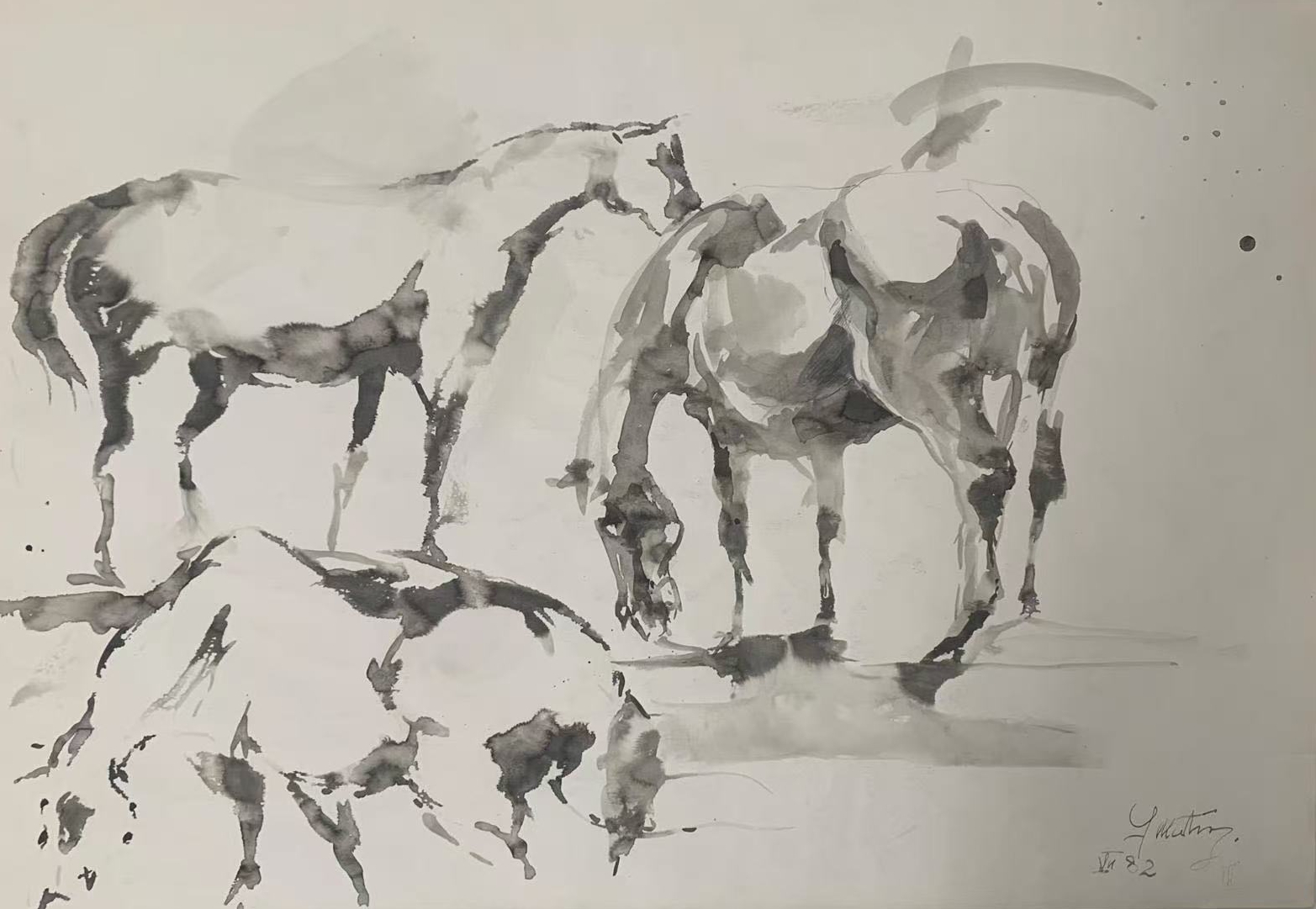
Due to his strong inclination toward drawing and painting, he entered the Graz School of Arts and Crafts in 1939. Professor Rudolf Szyszkowitz recognized and nurtured Martinz’s talent. In 1943, his studies were abruptly interrupted by his conscription into military service. The experiences of this problematic period forced him toward his artistic subject matter and a necessary form of expression. Martinz documented his intellectual stance through accusatory animal depictions created during this time.
After the war years, the artists who had returned from military service gathered again around Professor Szyszkowitz to resume their artistic and intellectual work following the tragic interruptions.
In 1947, Fritz Martinz moved to Vienna to study at the Academy of Fine Arts, where he was accepted into the master class of Professor Albert Paris Gütersloh and prepared his diploma. Through his intense artistic and social experiences, he felt it absolutely necessary to follow a new realist grammar for that time and consequently decided against abstract art or the literary pictorial concepts of the “Fantastic Realists.”
Through his study of the human figure—the creaturely aspect of existence as such—Martinz increasingly arrived at his thematic pictorial statements.
In 1949, Professor Gütersloh invited him to join the Vienna Secession. In 1950, Martinz completed his diploma and was awarded the State Prize of the Academy of Fine Arts.
During the 1950s, he worked on large figurative compositions. Martinz had to correct his war experiences both ideologically and formally; he drew in museums in order to prove himself in a very conscious manner. At that time, his works did not sell well, and he was therefore forced to finance his study trips through “side jobs.”
In 1953, he received an invitation to the Venice Biennale. The discussions and engagement with the works of Italian realists of that period were reflected in Martinz’s figurative painting. A very intense period of work began. Driven by his interest in consistently realistic subjects, Fritz Martinz spent months at the St. Marx slaughterhouse to capture its compelling tension. The “Slaughterhouse” became a central theme. He also created works featuring human figures—Love Gardens—as well as countless preparatory drawings.
Between 1953 and 1960, the most significant works of his later oeuvre were created. In 1960, Martinz presented his works to the public. Together with Alfred Hrdlicka, he exhibited in the then still existing Zedlitz Hall. It was the first exhibition of Realists, financed by Fritz Martinz’s father.
Subsequently, Martinz was invited to numerous international exhibitions. In 1962, the second Realist exhibition took place, once again together with Hrdlicka.
The artistic engagement with pictorial space—color and form—became increasingly specific, clear, and compelling. In constant interplay between exhibitions and concentrated studio work, the years led up to the major breakthrough of the Realist group as “Figure – Vienna Naturalists” in the underground garage of the Vienna Central Savings Bank in 1969.
In the autumn of the same year, Martinz was appointed as a teacher at the Vienna Art School (Adult Education Center) on Lazarettgasse.
Throughout his entire body of work, Fritz Martinz consistently advocated for humanism. His themes and content served the cause of peace and were drawn from mythology, history, and contemporary events, which he processed in numerous studies, autonomous drawings, cycles, paintings, triptychs, and icons.
Dorothea Martinz
Awards
1950 – State Prize of the Academy of Fine Arts, Vienna
1952 – Award on the occasion of the International Youth Festival, Bucharest
1953 – Graphic Arts Prize, Biennale del Mare, Rimini
1965 – Prize of the Theodor Körner Foundation Fund
1968 – Prize of the Vienna Art Fund
1970 – City of Vienna Prize for Painting and Graphic Art