
Kaizhan Chen
Chen Kaizhan
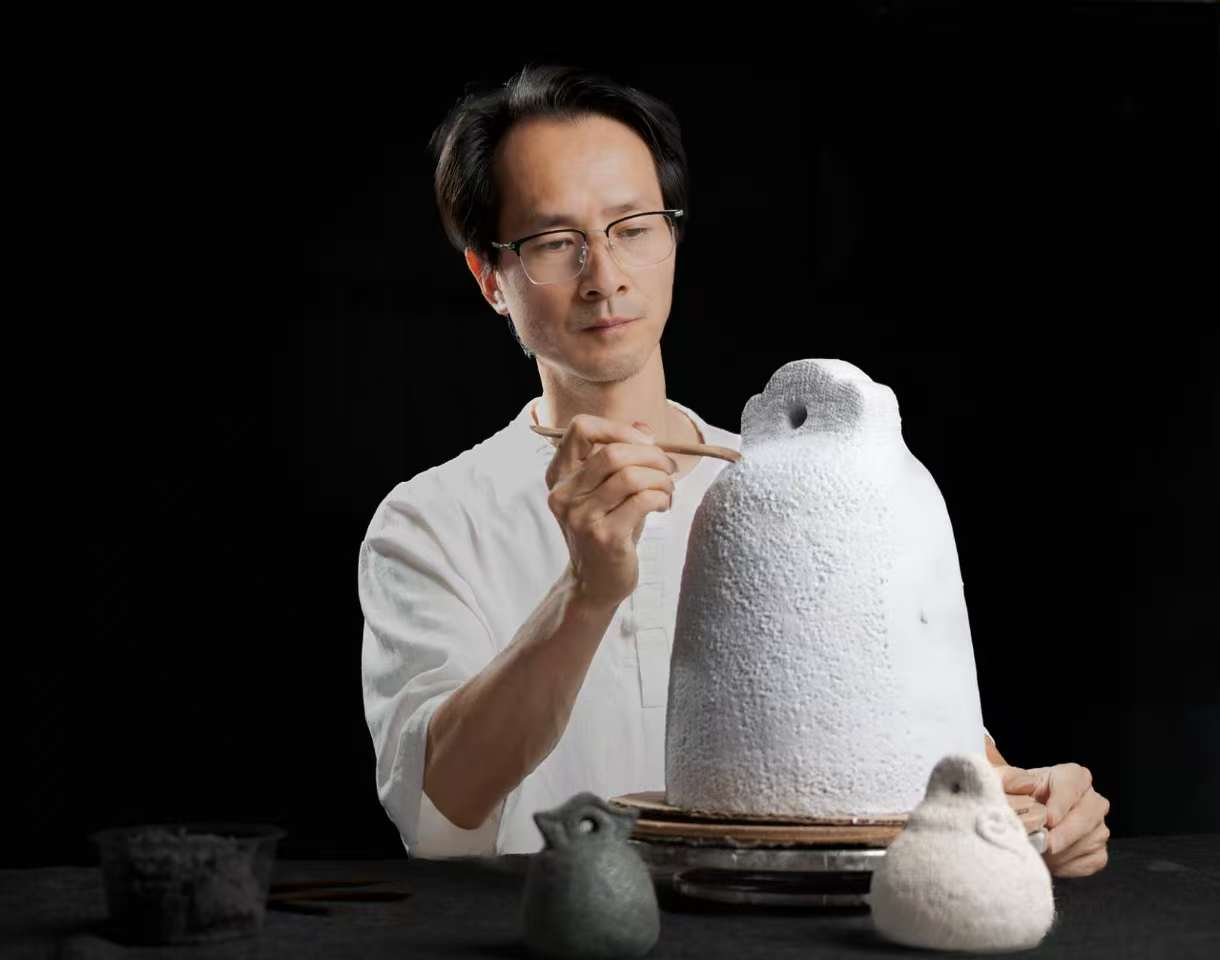
Chen Kaizhan, born in 1977 in Tong’an, Fujian Province, China.
He developed an early interest in art, and his creative practice spans traditional Chinese painting, calligraphy, farmer painting, paper-cutting, paper sculpture, and comics.
He is currently Director of the Fengyi Eco Paper Sculpture Museum, a specially invited editorial board member of Children’s Art magazine, and a member of the China Children’s Modeling Art Association as well as the China Folklore and Folk Arts Association. He is also a representative inheritor of Fujian Intangible Cultural Heritage Farmer Painting (Tong’an), a third-batch Folk Culture Talent of Tong’an District, a second-batch Rural Craftsman of Xiamen City, and Vice Chairman of the Tong’an Folk Artists Association.
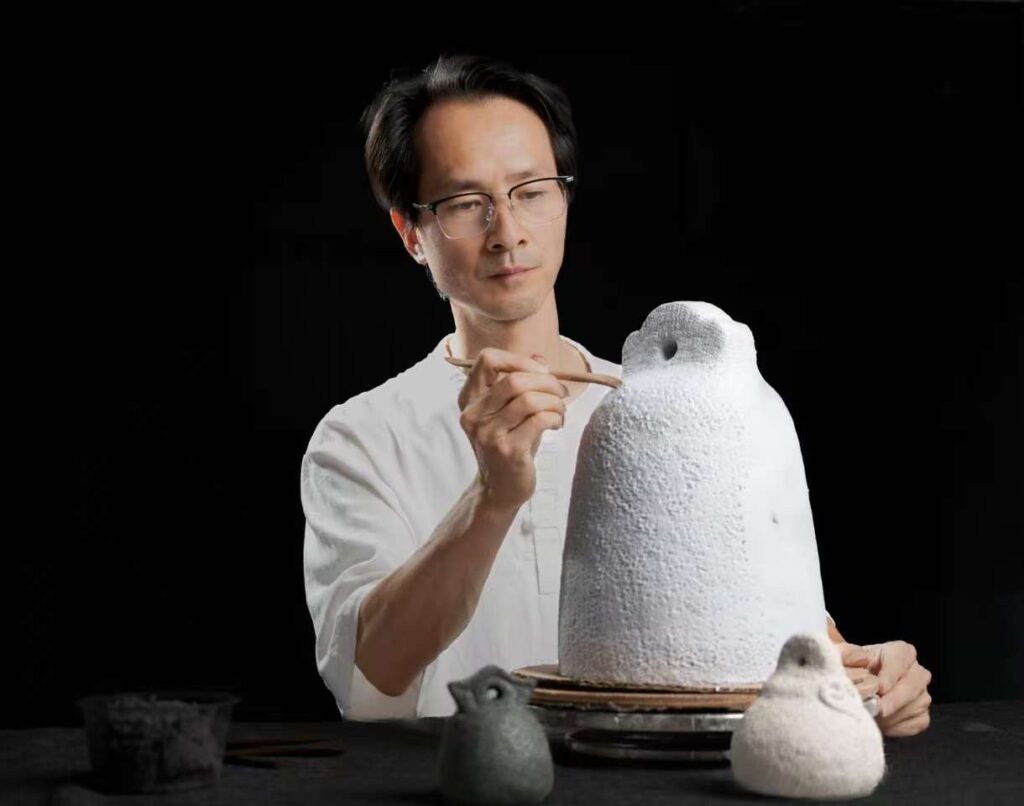
In 2010, Chen Kaizhan founded the Fengyi Art Society. Alongside his teaching work,
he began exploring hands-on artistic practice that both preserves traditional paper sculpture techniques and integrates his own life experience. By recycling waste paper into pulp, he developed innovative methods that imitate stone carving and other textures. His paper sculptures are remarkably lifelike—so realistic they can be mistaken for other materials—and some functional paper vessels are even capable of holding water. His works have received multiple awards and were recommended by the local Education Bureau for participation in the 2024 Fujian Lifelong Learning Project Exhibition.
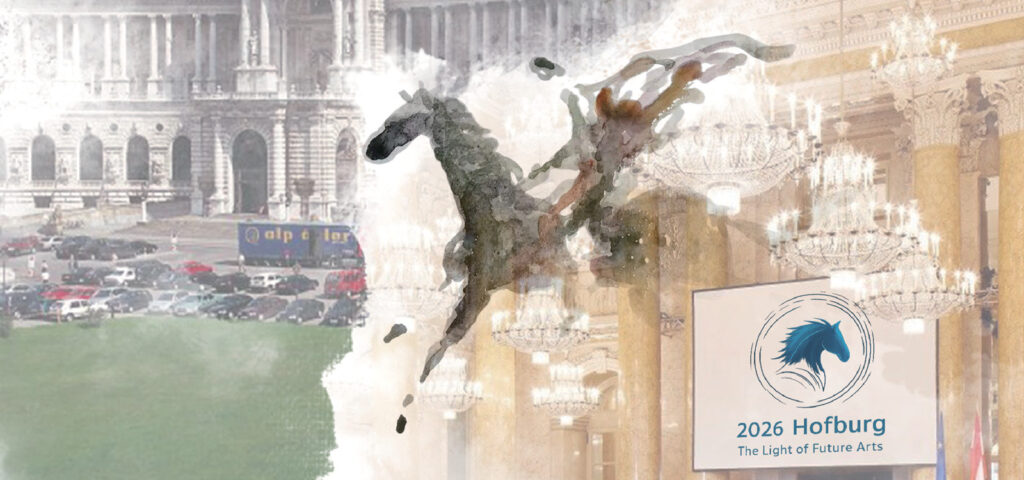
The exhibited work First to Charge Ahead depicts a galloping horse created from
discarded newspapers, embodying Chinese cultural elements and spirit. By freezing and reshaping old newsprint, the artist roots the work in traditional culture while aligning it with contemporary context, echoing global concerns around environmental sustainability.
The horse’s form draws inspiration from the full-bodied strength of the High Tang dynasty combined with the dynamic momentum of forward motion. Its totemic surface carries the weathered, time-worn texture reminiscent of Dunhuang murals.Within its minimalist form lies the poetic vitality of Eastern aesthetics and the powerful energy of the present era.
